1. Introduction
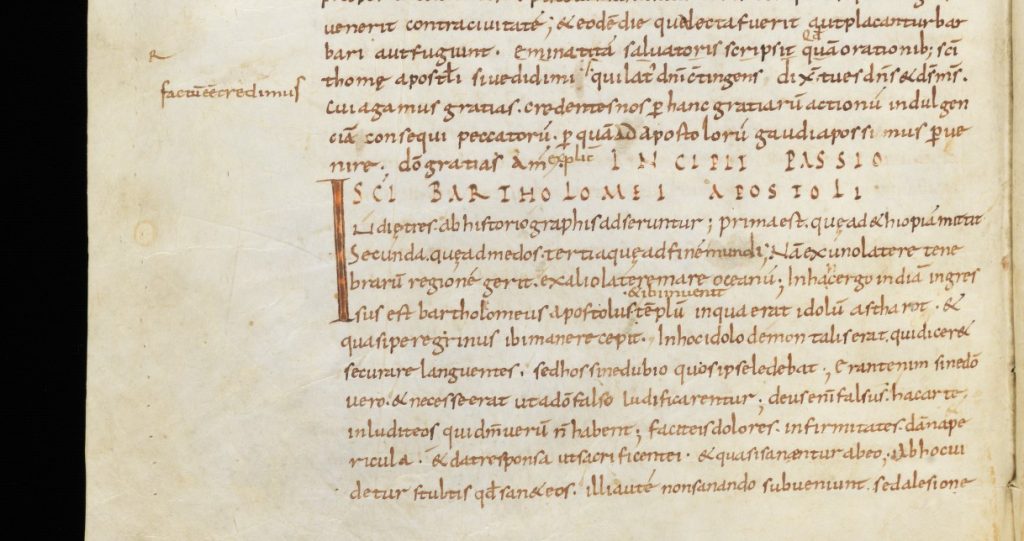
“So Many Saints, So Little Time” — so historian Danuta Shanzer characterised the “favourite compulsion” of Gregory of Tours, a sixth-century hagiographer and Bishop (Shanzer 2003, 20). It refers to the fact that Gregory wrote several saints' lives, passions, and miracles, as well as included hagiographical elements in his history writing.
But Gregory was not unique: saints were a central part of early medieval life.
Saints were so central in fact that hagiography, or writings about saints, is one of the dominant genres of textual production in the surviving manuscript evidence from the Christian early Middle Ages.
But how were these manuscripts used by the communities that produced them? Can “New Philology” help in interpreting the manuscript evidence of hagiographies? And ultimately, what light can hagiographical texts shed on the societies that composed, read, and copied them?
This e-learning tool has three goals:
a) to introduce the cult of saints and the associated hagiography that both perpetuated and recorded them;
b) to provide an overview of certain principles from “New Philology”;
c) to bring the above two points together an examine the example of one composite manuscript to explore these contexts.
Contents
- Introduction
- Cult of Saints in the Early Middle Ages
- Hagiography
- New Philology
- Manuscript Evidence
- Conclusions
- Bibliography